From open source to operational insight: how OSINT is shaping modern intelligence
Once viewed as a niche capability, open source intelligence (OSINT) serves as a foundational element of modern intelligence, incorporated in nearly all finished intelligence products and informing decision-makers at all levels.
The Department of War (DoW) 2024-2028 OSINT Strategy, published by the Defense Intelligence Agency, underscores the rapid growth of digital communications and publicly available information as a game-changing shift for the Intelligence Community (IC). The strategy calls for unified collection and reporting, the integration of advanced technologies, and the continued professionalization of the OSINT workforce. Similarly, the Office of the Director of National Intelligence (ODNI) 2024-2026 OSINT Strategy states, “The ability to extract actionable insights from vast amounts of open source data will only increase in importance.”
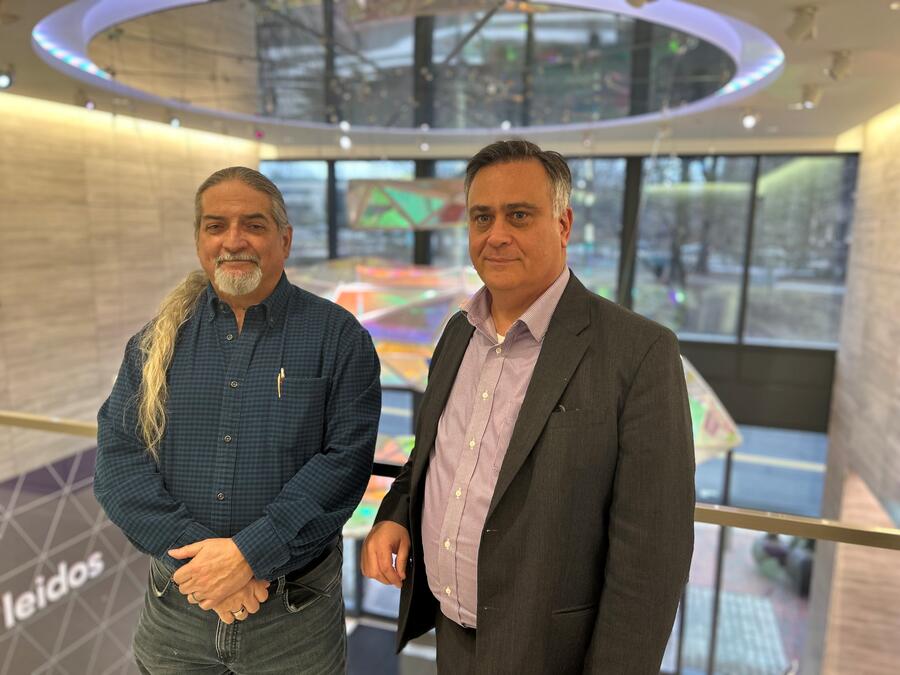
To explore how OSINT has evolved and how Leidos is advancing the discipline, we spoke with two OSINT subject matter experts: Dave Drawdy, Leidos senior OSINT subject matter expert, former U.S. Army OSINT leader and a founding member of the U.S. Army OSINT training programs; and Richard Day, a Leidos portfolio director, former senior intelligence officer and former leader in the Central Intelligence Agency (CIA)’s Open Source Center.
This Q&A has been edited for clarity.
OSINT Today
For an audience new to the term, how do you define OSINT, and why is it so important today?
Dave Drawdy: At its core, OSINT is intelligence derived from publicly available information and used to answer intelligence questions. The key word is intelligence. It’s not just going online and searching, it’s about applying professional tradecraft to collect, assess and analyze information responsibly and legally. Like every intelligence discipline, OSINT has rules and oversight. Analysts must protect sources and methods, respect civil liberties and privacy, and operate within established policy. What differentiates OSINT is that it’s often the first resort that informs other intelligence collections. And OSINT makes up a significant portion of intelligence reporting used at the highest levels, including material that informs senior government leaders.
Richard Day: Another important point is that OSINT is global by nature. It involves foreign languages, cultural context and increasingly, human language technology and other artificial intelligence (AI) to collect, process and analyze information at scale. Analysts may observe online spaces, forums or social platforms – with the important note that this is typically done without direct engagement to ensure they stay within OSINT authorities. Done right, OSINT provides broad situational awareness that other intelligence disciplines simply can’t replicate on their own.
Can you share your personal experience and professional history with OSINT?
Drawdy: When I was working with U.S. Army Intelligence and Security Command (INSCOM) in the early 2000s, OSINT wasn’t widely accepted as a formal intelligence discipline. The IC was still figuring out authorities, policy and tradecraft – especially as the volume of publicly available information exploded after the Cold War and before 9/11. After retiring from active duty in 2002, I continued working with INSCOM, helping build unclassified country resources, integrating OSINT into the Army’s Foundry training program, and ultimately helping stand up what became the Army OSINT Office (AOO). Over time, we developed policies, training and safe collection practices that helped institutionalize OSINT as a vital Army intelligence resource. Today, I bring that experience to Leidos, supporting programs that operationalize OSINT at scale.
Day: I spent much of my career in leadership roles at the Open Source Enterprise (OSE) at the CIA, where OSINT increasingly became part of enterprise intelligence workflows. OSE evolved from the former Foreign Broadcast Information Service (FBIS), which began operations during WWII monitoring global foreign media, including radio, TV broadcasts and print media. As technology evolved – notably the internet and more recently, AI – the open source mission evolved with it, leveraging technology to exploit vast amounts of open source data. During this period, the open source mission developed into a distinct intelligence function requiring specialized tradecraft and skills. Now at Leidos, I focus on building and managing intelligence programs, many of which rely on OSINT.
Program Success and Real World Impact
Can you share examples of Leidos programs where OSINT has played a critical role?
Drawdy: One example we have at Leidos is our work supporting an AI-enabled digital media exploitation platform that supports the open source tasking and aggregation network. This tool helps manage how OSINT is tasked, collected, produced and shared among military and defense partners.
Day: We also manage platforms which provide OSINT collection and processing across geographic mission areas. These platforms automate workflows and enable information sharing at scale while enforcing policy and tradecraft standards. In addition, Leidos brings deep expertise in data science and the information environment. For example, we helped deliver the first platform that provided tailored solutions based on regional realities, such as understanding which media outlets are most influential in different parts of the world. We also leverage open source geospatial data to create tailored mapping products that support operational decision making.
What feedback have you received from analysts using these tools?
Drawdy: Analysts consistently point to improved workflow and confidence. We provide a walk through of the open source tasking and aggregation network to DoW and IC users several times a week. Users are impressed by how it integrates policy, automation and usability. Leidos often serves as the bridge between users and developers, ensuring tools reflect real analyst needs. For example, a team of Leidos OSINT analysts were recognized with the Defense Intelligence Agency Team Award for leveraging innovative supplemental collection methods to support Joint Task Force - Southern Border for a critical southern border mission.
Day: Even beyond dedicated OSINT programs, Leidos applies OSINT methodologies and tools across many of our solutions, such as AI-enhanced machine translation, optical character recognition, audio processing and computer-assisted translation workflows. For example, Leidos experts in automated speech recognition developed tailored tools to enable transcription across audio and video sources in multiple languages and dialects, even in noisy or degraded recordings common in intelligence and military contexts. Leidos experts also integrated natural language processing into machine translation tools for advanced tasks such as named-entity recognition, metadata tagging, sentiment analysis and topic clustering. These improvements deliver high-quality, mission-specific translations while reducing reliance on human linguists for routine tasks.
The Future of OSINT
How do you see OSINT evolving over the next five to ten years?
Drawdy: Institutionally, we’re seeing renewed momentum across the DoW and the IC to formalize OSINT training and governance, including efforts tied to national and service-level open-source centers. Technologically, AI and large language models will make information more accessible.
Day: Automation is already changing the field. Tasks that once required large teams are now machine-assisted, with humans remaining “in the loop.” The challenge is ensuring accuracy, transparency and trust as more reporting is AI-enabled.
What message would you share on National OSINT Day (Feb. 26)?
Drawdy: Many people see OSINT as “just Googling.” However, OSINT is an intelligence discipline that must be treated as a tradecraft and as such, it requires continuous training and critical thinking through practice.
Day: Agreed, and I will add that technology is essential – but tradecraft can’t be outsourced. OSINT works best when integrated with other intelligence disciplines and supported by a strong professional community, including organizations like the OSINT Foundation.
Today, the message is simple: OSINT matters – and done right, it helps the world understand itself more clearly.
LEARN MORE ABOUT LEIDOS INTELLIGENCE