Smarter spacing, better journeys
How Leidos and NATS are reshaping airport performance.
Three Points to Remember
Performance gains now come from smarter operations, not new runways. Data‑driven arrival spacing is unlocking capacity within existing constraints.
Pairwise is delivering clear, measurable results. Improved punctuality, reduced delays and lower emissions at Heathrow.
The approach scales globally. Similar gains at Schiphol and Toronto show this is a transferable solution for constrained airports.
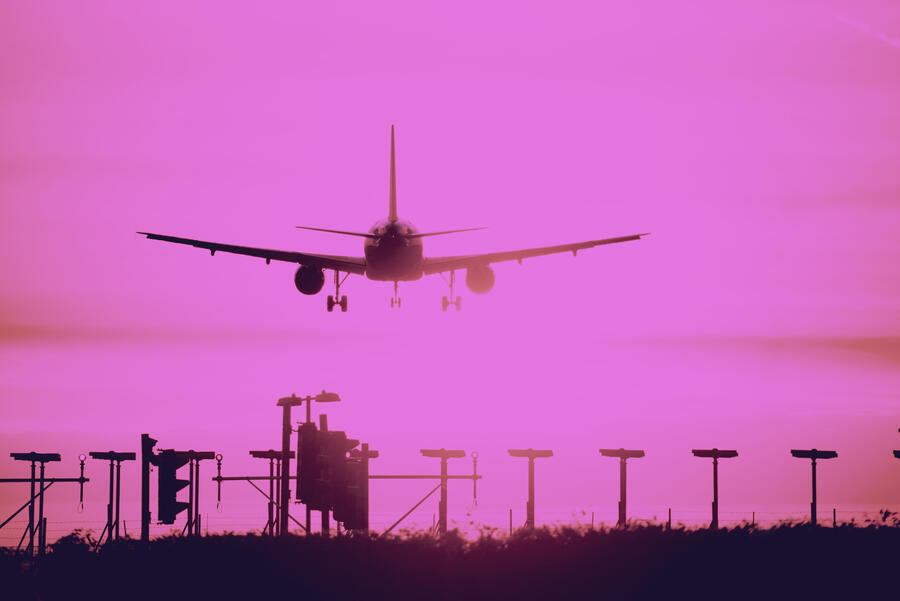
As airports face growing pressure to improve punctuality and reduce environmental impact, many are reaching the limits of what physical infrastructure alone can deliver.
At the world’s busiest hubs, runway expansion is rarely an option. Instead, performance gains must increasingly come from smarter use of data, technology and operational coordination.
At London Heathrow, that shift is already delivering measurable results. Intelligent Approach (IA) — an arrivals spacing tool that optimises runway capacity, jointly developed by Leidos and NATS — recently introduced a new capability: Pairwise. This innovative approach to separating arriving aircraft is now playing a central role in Heathrow’s operational turnaround.
Pairwise helps boost on‑time performance and reduce carbon emissions by enabling safer, more efficient aircraft spacing. Its early impact highlights the broader value of IA, where smarter, data‑driven spacing is fast becoming a defining lever for airport performance and operational resilience.
A new phase for Heathrow operations
Over the past year, Heathrow has recorded a clear improvement in punctuality, with almost 80% of flights departing on time, reflecting a wider operational transformation supported in part by Pairwise. The shift was recently highlighted in The Telegraph, which noted Heathrow's return as Europe's most punctual major hub. Progress has also been driven by closer collaboration across the airport community and tools that enable more predictable arrivals, even in challenging conditions.
At an airport operating close to maximum capacity, incremental improvements can have an outsized effect.
Smoother arrival flows help reduce airborne holding, improve recovery from disruption and support more reliable day-to-day operations.
For passengers, this translates into smoother journeys and fewer knock-on delays. For airlines and airport operators, it means greater resilience, particularly during peak morning waves when the network is under the most pressure.
Heathrow’s director of operations, Dale Reeson has highlighted the contribution of Pairwise to these improvements:
“It’s world-leading now, what happens here. We have maximised the utilisation of our runways to a level I don’t think anyone has seen before.
It’s an absolute game changer and the foundation of the punctuality improvement because it means arrivals are much closer to their scheduled time, which makes it easier for everyone.”
Early results that matter
Analysis comparing the first six months of Pairwise operation with the same period the previous year shows clear performance gains. The proportion of arrivals with no delay increased by more than six percentage points, while average arrival delay fell by nearly 20%. Peak morning landing rates also increased, and CO₂ emissions per flight fell by around 19%, equivalent to approximately 18,600 tonnes over the evaluation period.
For Heathrow, these gains translate into greater resilience during peak periods and a stronger ability to maintain predictable operations even when conditions are challenging.
From local deployment to global relevance
While Heathrow is the first airport to deploy Pairwise, the wider IA system is already contributing to capacity improvements at other major hubs, including Amsterdam Schiphol and Toronto Pearson. Its integration with Indra’s ManagAir air‑traffic management platform has also broadened access to the technology for airports worldwide.
The relevance extends beyond Heathrow’s specific circumstances. Many major hubs face similar constraints: limited runway capacity, rising demand, pressure to reduce emissions and limited appetite for large-scale infrastructure expansion. The experience at Heathrow demonstrates that performance gains are still possible within existing footprints.
At Amsterdam Schiphol and Toronto Pearson, IA is also delivering measurable performance gains. Schiphol has reported an increase in runway capacity of up to six additional landings per hour per runway, especially in challenging wind conditions, contributing to improved punctuality and reduced noise and emissions. At Toronto Pearson, improved spacing efficiency has contributed to three extra arrivals per hour, even under demanding weather and traffic conditions.
These results are sharpening the industry’s focus on how precision spacing and data‑driven coordination can help unlock incremental capacity across different regulatory and environmental contexts. Airports facing tight runway constraints, rising demand and emissions pressure are now looking to Intelligent Approach as a proven, low‑cost way to improve throughput, reduce delays and enhance resilience without requiring new infrastructure.