When memory becomes history: 25 years after 9/11
Reflecting on service, remembrance and what one generation passes to the next
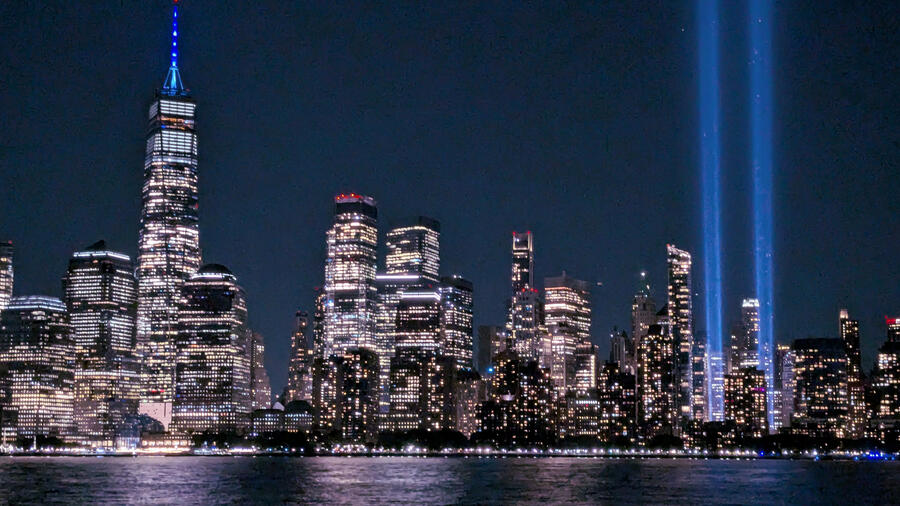
On Sept. 11, 2001, it felt to many as though the world had stopped.
People gathered around televisions and radios, trying to understand what was unfolding. For those who experienced that day, many details remain vivid: where they were, who they called and how they first began to comprehend what had happened.
Twenty-five years later, a growing number of Americans know September 11 only through the experiences others have shared. As firsthand memory recedes, the anniversary raises an important question: What do we carry forward when memory becomes history?
Leidos Lead Technical Writer Bridget Groce was working at 55 Water Street in Manhattan, about eight blocks from the World Trade Center, when the first plane hit the North Tower. From the windows, she and her colleagues watched the second plane strike the South Tower before evacuating the building.
We all got to the lobby and our manager paired us all up, so nobody would be alone.
They began walking away from Lower Manhattan and had reached Houston Street when the towers fell. Groce eventually made it to a colleague’s home in Greenwich Village before finding a way to Brooklyn. She didn’t arrive home on Long Island until 11 p.m. that night.
Remembering what was lost
Nearly 3,000 people were killed on September 11. Thousands of families lost someone they loved. First responders rushed toward danger, while survivors, recovery workers and others affected by the attacks would carry lasting physical and emotional consequences.
The tragedy also reached beyond American shores. Citizens of more than 90 countries were among those killed, and communities around the world responded with grief, compassion and solidarity.
Amid that loss, another story was unfolding: how people responded.
Service in many forms
In the hours, days and years that followed, service took many forms. First responders and ordinary people helped strangers. Volunteers supported families and communities. Some entered the military or public service, including careers supporting national security. Others cared for neighbors or became more conscious of their responsibility to those around them.
For Leidos Program Manager Todd Fox, then an active-duty U.S. Naval Flight Officer serving at Naval Air Station Brunswick in Maine, the shift was immediate. He was at a local DMV in uniform when the South Tower was struck. A Vietnam veteran working behind the counter called him up before others in line, telling Fox that his day – and his life – had likely just changed dramatically.
Fox returned to base, where a full lockdown was underway. His squadron began supporting around-the-clock flights as part of homeland coastal security operations while U.S. airspace was cleared of all non-military flights.
My life, like most military and many non-military personnel’s, changed forever that fateful day.
But service after September 11 did not belong only to those in uniform.
For Leidos Senior Manager Tammy Triplett, one aspect of service took place much closer to home. Her mother-in-law had Alzheimer’s disease, and while watching the news coverage, repeatedly experienced what she was seeing as though it were happening for the first time.
For a few weeks, the family took turns sitting with my mother-in-law and away from the TV … as we all tried to grasp what was happening and figure out how to process it for ourselves while keeping her sheltered from reliving it over and over.
It was one family's response to an extraordinary moment, but across the country, acts of service took different forms, many growing from the same instinct: to care for the people around us when they needed it most.
That spirit of service continues today through efforts to support those affected by September 11 and preserve its history. As part of this year's observance, Leidos is supporting the 9/11 Memorial & Museum's Never Forget Fund, to educate future generations about the events of September 11, and Tuesday's Promise, in support of military and 9/11 families.
The two organizations reflect different but connected needs that remain 25 years later: caring for people who continue to live with the effects of trauma and loss and ensuring the experiences of September 11 are preserved for generations to come.
As the years have passed, that second responsibility has taken on new significance. A growing number of people have no firsthand memory of September 11 and will know the day through the histories that are preserved and the stories others choose to share.
Between those generations are people like Ashleigh McGrath.
Now a Marketing Intelligence Analyst for Leidos, McGrath was a second grader on September 11 and remembers details that might otherwise seem ordinary — her classroom, the cover of her spelling book and the tap of the wooden yardstick her teacher used to turn on the television. She also remembers the silent fear of waiting to learn whether family members who worked in or near the towers were safe.
Her family was safe, but some of their friends and colleagues were among those lost.
“If I were to word it to the younger generations, I would tell them that it was a very scary day for seven-year-old me, but Mr. Rogers always said that whenever things look scary, to look for the helpers — and there they were,” McGrath said.
The actions and heroics of first responders who ran toward the inferno helped heal a city and a nation, and for that, I will always feel grateful.
When memory becomes history
Future generations will encounter September 11 through the voices of those who experienced it, the histories preserved and the choices made about how its story is told.
What they inherit should reflect both the scale of the loss and the many ways people responded —through service, community and consequential choices in moments of crisis—without reducing a complex history to one simple lesson.
Twenty-five years later, remembrance is increasingly a shared responsibility: to listen, preserve these experiences with care and ensure their human meaning is not lost with time.