Parcata™
The AI-powered autonomous vulnerability operations platform
Staying ahead of AI-enabled threats
Artificial intelligence has changed the speed and sophistication of cyber threats. As attackers use AI to uncover and exploit vulnerabilities faster than organizations can respond, traditional vulnerability management isn’t enough.
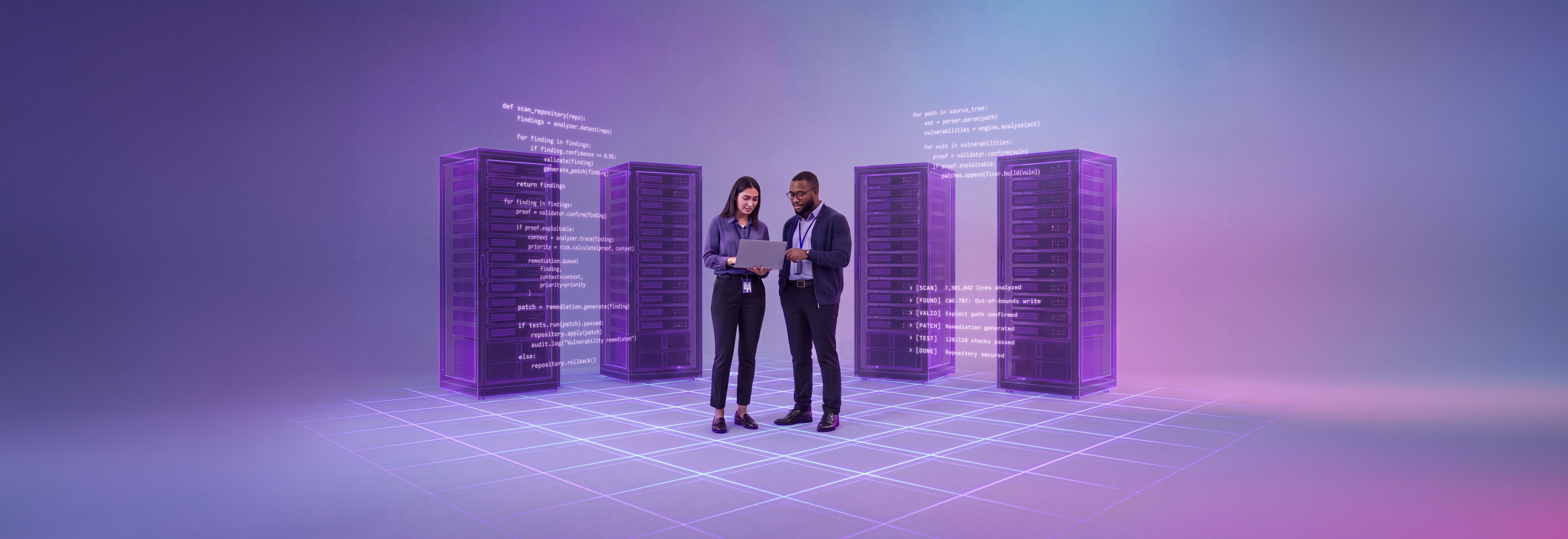
Parcata™ is our AI-powered autonomous vulnerability operations platform that continuously discovers, validates and helps remediate software vulnerabilities before they become operational risk. Developed by Kudu Dynamics, a Leidos company, with technology refined through DARPA’s AI Cyber Challenge, Parcata integrates with existing DevSecOps and security workflows. It can run on your hardware and within your own environment — including classified and air-gapped networks — so security teams strengthen software resilience while staying in control.
Proven on our own code
Results from an internal pilot of Parcata
7 million+
Lines of code tested
200+
Vulnerabilities found
~21 minutes
Time to patch a vulnerability
Why Parcata
Press Release
Leidos Introduces Autonomous Platform to Remediate Cybersecurity Vulnerabilities
"The use of AI by cyber adversaries has changed the game," says Leidos Intelligence Sector President Jason O'Connor. "We strive for left of breach to detect and remediate, and ensure the mission isn't dependent on one frontier model."
READ NOW
INSIGHTS
When AI finds bugs faster than humans can fix them
AI is changing the pace of cyber conflict. As adversaries use AI to uncover software vulnerabilities faster than organizations can remediate them, cybersecurity teams must evolve beyond periodic vulnerability management. Learn why continuous vulnerability operations, AI-assisted analysis and human oversight will define the next generation of software resilience.
READ NOW
FAQs
-
Parcata is Leidos' AI-powered autonomous vulnerability operations platform. It continuously discovers, validates and remediates software vulnerabilities before they become operational risk – while keeping your team in control.
-
Parcata is built for organizations that manage software where an unknown cybersecurity vulnerability can carry national security, operational or public safety consequences. Our initial focus is U.S. government customers across the Intelligence Community, the Department of War and U.S. Cyber Command, with an architecture designed to expand into commercial markets over time. Because Parcata can run on your own hardware and in your environments — including classified and air-gapped networks — it fits the security requirements of the missions it supports.
-
Traditional vulnerability management tools primarily identify known vulnerabilities. Parcata extends that process by autonomously discovering previously unknown vulnerabilities, validating exploitability with evidence, prioritizing real-world risk and generating remediation recommendations that accelerate response.
-
No. Parcata is designed to augment—not replace—security professionals. By automating repetitive analysis and remediation tasks, it enables analysts and developers to focus on higher-value work while maintaining human oversight for critical decisions.
-
Autonomous vulnerability operations use AI to continuously discover, validate, prioritize and help remediate software vulnerabilities across the software lifecycle. Rather than relying on periodic scans and manual analysis, autonomous operations help organizations respond faster while reducing operational risk.
-
Yes. Parcata is designed to integrate with existing software development, CI/CD, DevSecOps and vulnerability management workflows, helping organizations enhance current security investments without replacing them.
-
Parcata supports multiple approved commercial, government and open-source AI models through a flexible orchestration framework. This approach allows organizations to evolve their AI strategy without being tied to a single model provider.
-
The name Parcata is inspired by the French term parc fermé, the secured area where Formula 1 cars are inspected and held before and after a race. Similarly, Parcata serves as a controlled environment where software is inspected, vulnerabilities are identified and validated, and remediation is prepared before deployment.