5 ways edge AI is changing MLOps forever
This National AI Appreciation Day, look beyond the AI hype
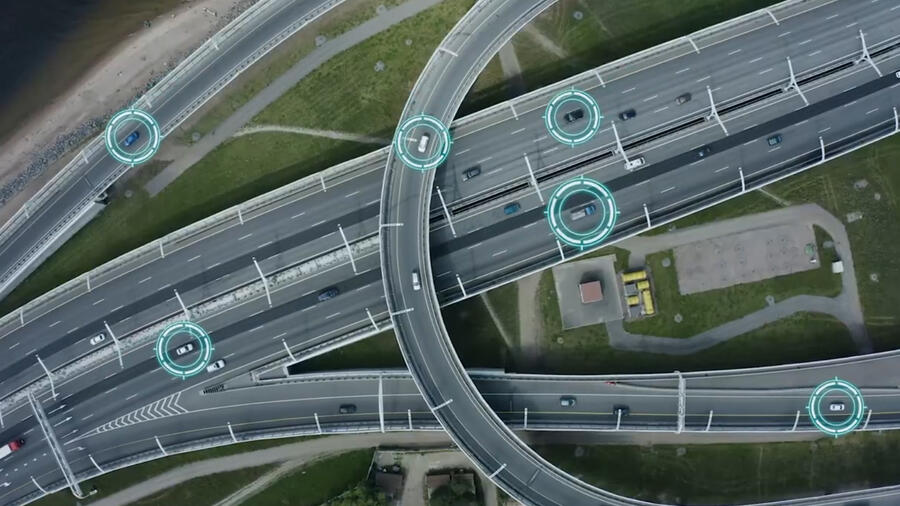
The AI making the headlines isn't always the AI making the biggest impact.
Some of AI's most important applications happen where lives, missions, and critical infrastructure are on the line.
From disaster response to autonomous systems, AI is increasingly being deployed in places where connectivity is unreliable, decisions have to happen in seconds, and sending every piece of data to the cloud simply isn't practical.
That's changing more than where AI runs. It's changing how AI is deployed, managed, and kept operational: what the industry calls MLOps.
Here are five ways edge AI is rewriting the rules ⬇️
#1 AI can't afford to wait for the cloud
For years, the cloud has been the default home for AI. But in the real world, waiting for information to travel to a data center and back can cost more than time.
Picture this ➡️ a search-and-rescue drone scanning earthquake debris for survivors. It can't afford to wait for a signal. It has to see, decide and act on the spot, even if it's operating without a network connection.
The future of AI isn't about replacing the cloud. It's about giving AI the ability to make critical decisions where they're needed, even when the cloud isn't.
#2 The smartest AI knows what to ignore
Modern sensors generate an overwhelming amount of information. Pushing all of it across a limited network doesn't make the decisions better, it can actually bury the one signal that matters.
The smartest AI identifies what's important, whether that's an unexpected movement, a vehicle entering an area, or a change in behavior, and prioritizes those insights first.
The result? Faster decisions, less network congestion, and more effective use of limited resources.
#3 If your AI needs a network, it's not ready
One of the biggest misconceptions about AI is that it's always connected.
In reality, some of its most valuable applications happen where connectivity is least reliable—remote regions, disaster zones, contested environments.
That's forcing organizations to rethink how they deploy AI. Instead of assuming the cloud is always available, systems are increasingly designed to continue operating independently and synchronize only when communications allow.
Reliable AI isn't judged by how well it performs online. It's judged by how well it performs offline.
#4 One intelligent system isn't enough anymore
The next generation of AI won't consist of isolated devices making isolated decisions.
It's drones, sensors, vehicles and operators working as one coordinated team, sharing only the most critical information and skipping the rest.
That requires intelligent coordination behind the scenes ensuring critical information reaches the right platform at the right time, even when communications are limited or disrupted.
It's a shift from building smarter devices to building smarter systems.
#5 Resilience is the new measure of AI success
For years, AI progress has been measured in bigger models, more computing power and higher accuracy.
Those metrics still matter, but once AI leaves the lab and enters the real world, another question becomes far more important: Will it still work when conditions aren't ideal?
That's why resilient edge AI is becoming a defining capability. Solutions such as Leidos' Adaptive Edge bring AI directly to sensors and operational platforms, enabling real-time analysis where decisions need to be made.
Combined with the Collaborative Autonomy Framework and Extension (CAFE), critical information can be prioritized and shared across distributed teams, even when bandwidth is constrained or connectivity is disrupted.
As organizations continue investing in AI, success won't simply be measured by building smarter models. It will be measured by building AI that continues delivering the right insight at the right time, even when conditions are at their toughest.
That's the future of AI operations, and it's already happening at the edge.

Edge AI in action: real-time object detection without the cloud
Key takeaways:
- Modern MLOps depends on intelligent, connected edge operations.
2. Adaptive Edge and CAFE enable autonomous AI beyond the cloud.
3. Leidos delivers resilient edge AI for real-time mission decisions.