Leidos delivers real-time munitions tracking to DoW
Three points to remember
- Near real-time data now flows directly from weapons systems to enterprise platforms, helping to reduce manual reporting delays and errors.
- The Automated Munitions Tracker integrates field artillery data with the War Data Platform and Joint Munitions Accountability System to deliver secure, decision-ready insight.
- Contested logistics requires speed, agility, and precision, and this real-time visibility is designed to help the warfighter adjust resupply as conditions change.
Contested logistics and the operational gap in munitions tracking
U.S. Army commanders in the Indo-Pacific faced a persistent problem: they couldn’t see, in real time, how quickly munitions are being used across dispersed units. In contested logistics environments, disrupted supply lines and rapid decision demands turn gaps in visibility, agility, and speed into direct risks to mission success.
During the 1st Corps Courage Lethality exercise in April, a Leidos team helped change that.
The solution: Automated Munitions Tracker (AMT)
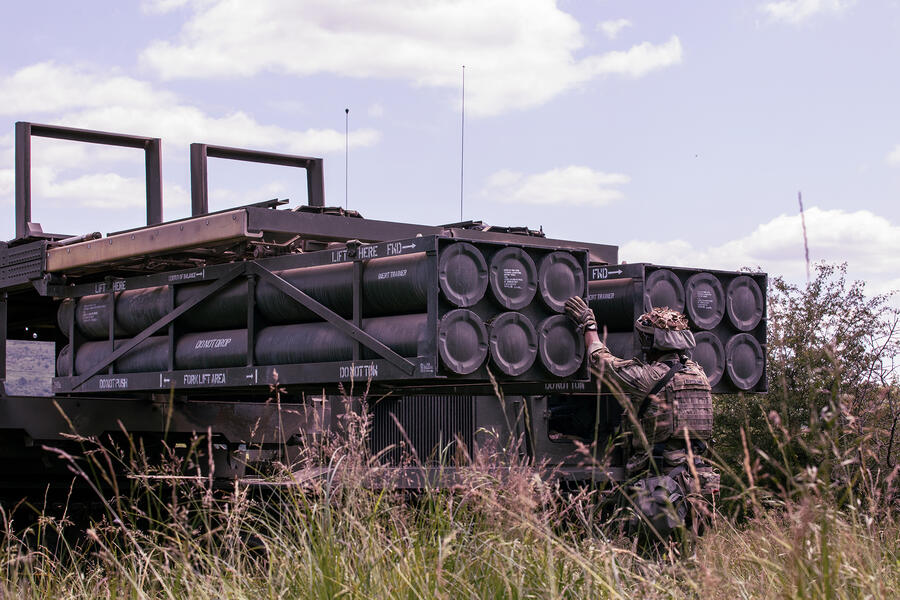
Working alongside U.S. Army Pacific and the 1st Corps Operational Data Team, Leidos deployed the Automated Munitions Tracker (AMT), a capability that delivers near real-time munitions expenditure data directly from field artillery platforms to commanders and Joint Staff planners.
Through this deployment, weapons-platform data flowed automatically into the Department of War’s War Data Platform for display in the Joint Munitions Accountability System (JMAS), helping to reduce the manual reporting, delays, and errors that have historically limited visibility across echelons. Commanders could see what was being expended, by whom, and at what rate, as it happened.
Real-time munitions data drives decision advantage
That level of visibility matters. In a contested environment, commanders must adjust resupply dynamically as conditions change. AMT is designed to support this by continuously collecting and processing data from the Advanced Field Artillery Tactical Data System, transforming it into decision-ready information that is intended to run on existing communications pathways without requiring new infrastructure, additional bandwidth, or significant additional burden on operators.
Built within the Army’s Continuous DevSecOps pipeline and deployed through the Tactical Data Platform, AMT moved from development to operational use, with U.S. Army Pacific approval in place.
This capability did not happen overnight; it’s the result of a two-year collaboration between Leidos and Army partners.
Enabled by partnership and scaling beyond munitions
"We worked with 1st Corps soldiers in the same tools, the same sprint cadence, and toward the same mission," said Dan McCormack, Leidos RC2E program manager. "That kind of trust and collaboration is what allowed us to deliver a significant new capability in less than two months. It is exactly the kind of partnership that Leidos Defense is built to enable."
While AMT is currently focused on munitions, the architecture is designed to scale to other supply classes, including fuel, repair parts, and medical supplies. The goal is to provide commanders with visibility into sustainment that is comparable to what they already expect in the fight.
Today, that advantage is not fully scaled. In many cases, critical decisions still depend on manual inputs or partial data. Expanding direct data access across platforms could help close that gap. It could provide echelons with more consistent real-time understanding, support interoperability, and enable more predictive planning rather than reactive response. The opportunity extends beyond improved reporting; it represents a meaningful change in how the Army sees, decides, and acts.
DELIVERING ADVANTAGE WITH CJADC2