The American aviation safety system most people don't see
How Leidos Flight Service helps pilots make safer decisions every day

Why it matters
- Every safe flight begins with critical information
- Aviation safety begins before the engine starts
- The safest aviation systems are often invisible to passengers
Flight safety begins long before an aircraft leaves the ground.
Prior to a pilot starting an engine or lining up on a runway, they answer one of the most important questions of the entire journey: Is it safe to fly?
The answer depends on having the right information at the right time. This includes weather, airspace restrictions, airport conditions, and other critical safety information that can change by the hour or even the minute.
For hundreds of thousands of general aviation pilots across the United States, that information comes from the Leidos Flight Service which is provided under the Federal Aviation Administration’s (FAA) Future Flight Services Program (FFSP).
While most commercial passengers may not know about Leidos Flight Service, it plays an essential role in the nation's aviation system, helping inform pilots before takeoff and supporting them throughout their journey.
More than a weather briefing: How Flight Service supports pilot decision-making
Most pilots engage with the service through 1800WXBrief.com or the 1-800-WX-BRIEF phone number.
Together, these services provide access to NextGen weather briefings, flight planning tools, flight plan filing, NOTAMs, and expert specialists who help pilots understand flying conditions before and during flight.
Behind the scenes, the Leidos Flight Service platform also powers web services used by many third-party flight planning applications, making trusted FAA information available wherever pilots choose to plan their flights.
Whether a pilot is preparing for a weekend cross-country trip, flying supplies to a remote community, conducting business travel, or taking a student on a training flight, the mission remains the same: deliver the right information before a decision becomes a risk.
Supporting one of the world's busiest aviation systems
The United States has the largest general aviation community in the world, with hundreds of thousands of aircraft flying millions of flights each year. From rural airfields to busy metropolitan airports, pilots rely on accurate, timely information to safely navigate the National Airspace System.
Leidos Flight Service helps make that possible by providing pilots with the operational information they need before departure, while also developing advanced surveillance, enhanced search-and-rescue tools, and initiating search-and-rescue operations if an aircraft operating on a filed flight plan becomes overdue.
It's a mission where reliability matters every day and not just during emergencies.
Trusted when it matters most: Supporting America's largest aviation events
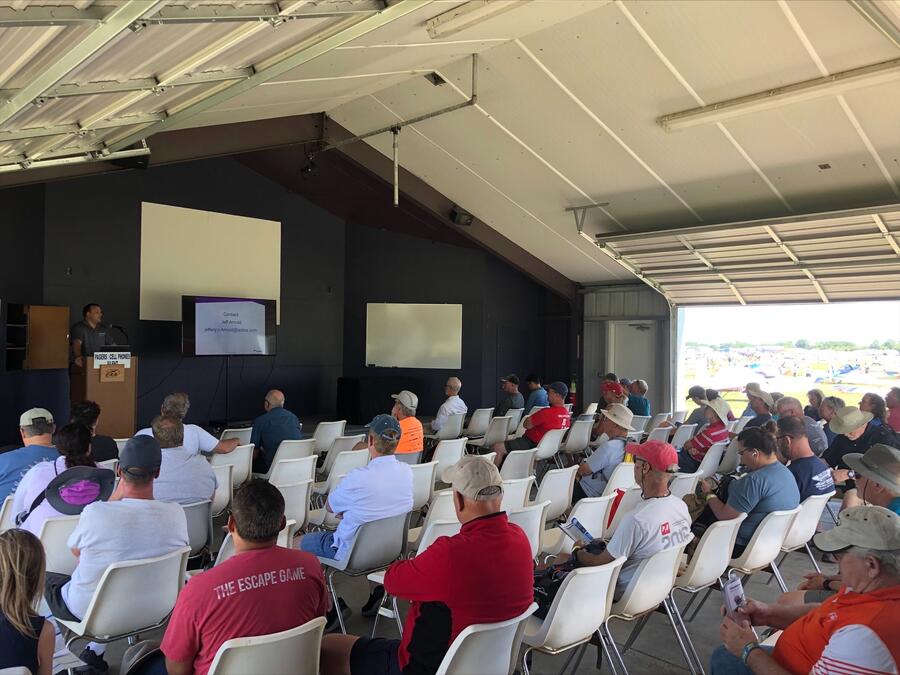
Although much of the Flight Service work happens quietly behind the scenes, its role becomes especially visible during some of the nation's highest-profile aviation events.
During the World Cup 2026, Leidos Flight Service specialists maintained more than 100 Temporary Flight Restrictions (TFRs), helping pilots safely navigate changing airspace around tournament venues across North America. The program also coordinated approximately 165 flight plans supporting the military aerial demonstrations over New York City during the nation's America 250 celebration.
For nearly two decades, Leidos Flight Service has also supported the Air Race Classic, providing weather briefings, flight planning support, and NOTAM services for one of aviation's longest-running all-women air races. When severe weather threatened the final day of the 2026 race, Flight Service helped organizers safely adjust the course, so every team could finish safely.
Leidos Flight Service also supports EAA AirVenture Oshkosh—the world's busiest week of flying—by issuing NOTAMs, assisting with flight planning, and helping thousands of pilots prepare for safe arrivals and departures during one of aviation's most complex annual events.
Whether supporting a globally televised event or a single pilot flying home for the weekend, the standard is the same: provide trusted information for better decisions and outcomes.
Quiet work, real impact: Improving aviation safety behind the scenes
When aviation safety works well, most people never notice. Even when it comes to national security. Leidos Flight Service has supported U.S. Customer and Border Protection contributing to $3.1M in federal seizures, including over 159 kilograms of narcotics and aircraft used for transporting the contraband.
People don't see the weather briefing that informed a pilot to delay departure. They don't notice the airspace restriction that kept aircraft safely separated from a major event. They don't hear the Leidos Flight Service specialist helping a pilot understand changing conditions before takeoff.
That's exactly the point.
Every day, that mission continues—helping the FAA deliver trusted information that supports safer flying across the National Airspace System. Because the most important aviation decisions are often made before an aircraft ever leaves the ground.
Three things to remember
- Flight Service helps general aviation pilots make informed preflight and inflight decisions
2. Timely weather, NOTAMS, and flight planning information strengthens safety across the National Airspace System
3. Trusted aviation information helps pilots reduce risk before every takeoff and throughout every flight
General aviation glossary
-
The FAA's official online portal where pilots can obtain weather briefings, file flight plans, review NOTAMs, and access Flight Service resources.
-
Information filed by a pilot before departure describing the intended route, destination, and flight details to support safe operations.
-
An FAA service that provides general aviation pilots with weather briefings, flight planning, flight plan filing, NOTAM information, and in-flight assistance.
-
All civil aviation other than scheduled commercial airlines and military operations, including recreational flying, business aviation, emergency services, agricultural aviation, and flight training.
-
The nationwide network of airports, air traffic facilities, navigation systems, aircraft, and procedures that enable safe flight across the United States.
-
An FAA notice alerts pilots to important operational information such as runway closures, navigation aid outages, or airspace restrictions.
-
A temporary restriction placed on airspace to protect aircraft and people during special events, emergencies, or security operations.