How mentoring opens STEM careers to Scotland's pupils
For five years, Leidos UK and SSERC have brought STEM careers into the classroom
Why it matters
- A year of mentoring helps pupils see STEM careers as within reach
- Practical projects and visits to Leidos' Glasgow office connect classroom learning with career opportunities
- Schools return year after year, building relationships that extend beyond the challenge
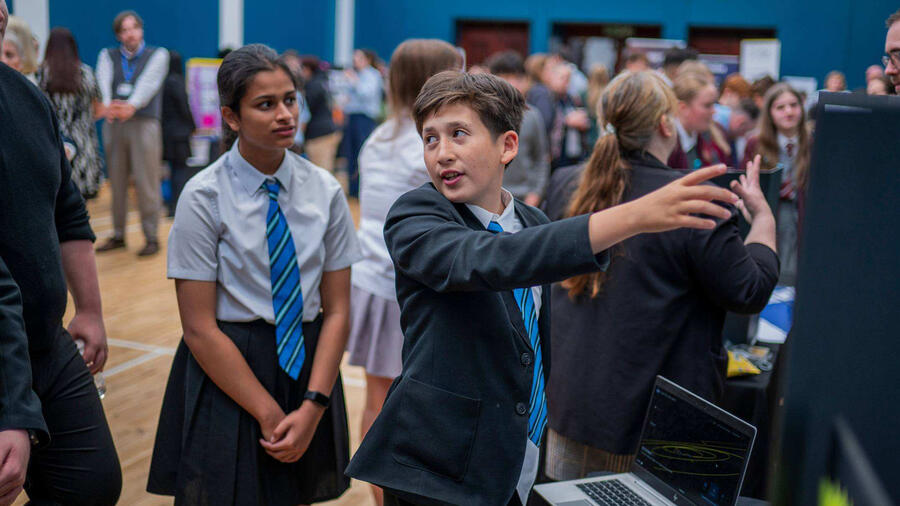
For pupils considering their future, practical projects offer an opportunity to discover how science, technology, engineering and mathematics (STEM) skills apply beyond the classroom. Working with an industry mentor also gives them someone to ask about the careers those skills could lead to.
Since September 2021, Leidos UK and SSERC, Scotland’s STEM education organisation, have brought those experiences together through their Education Industry Partnership (EIP). Pupils across the west of Scotland spend an academic year exploring a real-world challenge, developing a solution and working alongside UK-based Leidos mentors.
Five years on, the partnership has reached more than 250 pupils across 17 schools, offering a useful example for educators and employers seeking to connect STEM learning with career exploration.
Five years by the numbers
- 250+ pupils reached
- 17 schools engaged since 2021
- 9 schools have participated more than once
- 2,000+ mentor hours contributed since 2021
How the STEM challenge works
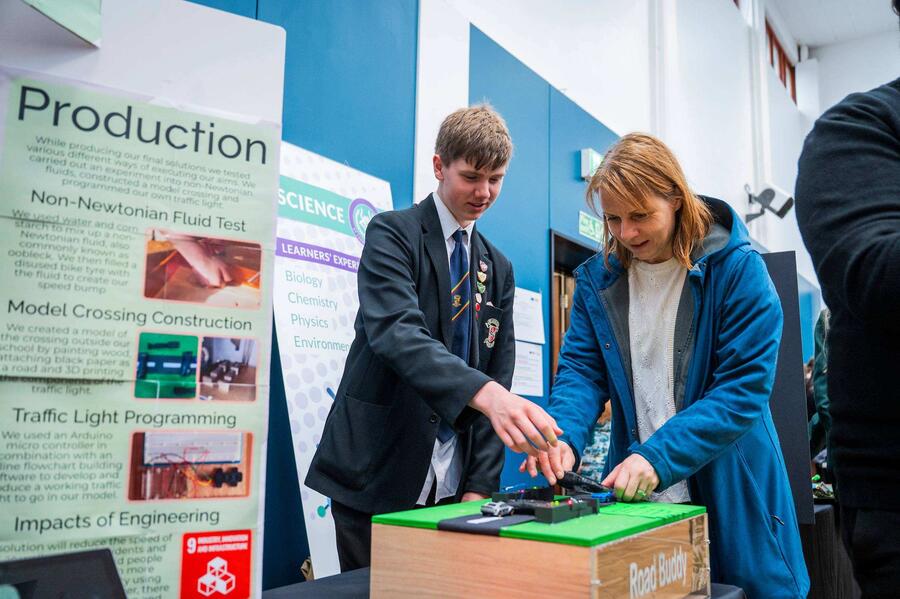
Teams of up to six pupils, supported by at least one teacher, choose a real-world challenge linked to one of Leidos’ six core values: integrity, inclusion, innovation, agility, collaboration and commitment.
From the launch event in November to the showcase the following June, pupils research an issue, develop ideas and design and build a solution. Each team works with at least one UK-based Leidos STEM Ambassador mentor throughout the process.
Pupil ownership and creative freedom are central to the programme. Rather than receiving a detailed brief, teams are given a challenge headline and shape their response, from defining the problem to deciding how to deliver their solution. UK-based Leidos mentors provide guidance while pupils remain in charge of their projects.
This open-ended approach gives young people opportunities to explore their own ideas, make decisions and take responsibility for the results. Teachers have consistently reported this freedom helps pupils engage more deeply with STEM.
Previous projects have explored accessible cinemas and sustainable clothing, putting their STEM skills into practice.
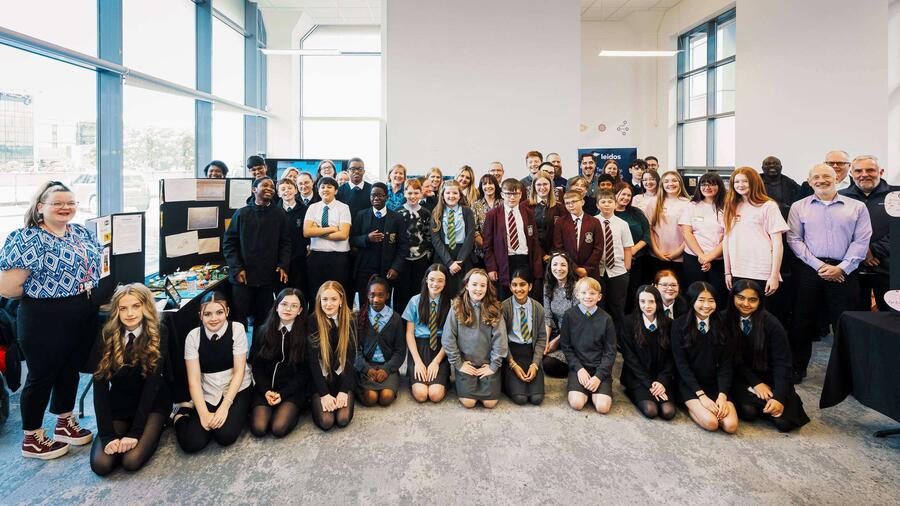
Midway through the programme, every team visits Leidos’ Glasgow office to see a professional STEM workplace. The programme culminates in the Glasgow Showcase each June, where teams present their work to families, employees from Leidos’ UK team and industry guests, receiving feedback from STEM professionals.
Alongside the challenge, pupils work towards the Scottish Government-funded Young STEM Leader Award, coordinated and delivered by SSERC. Each pupil records their development through its Discover, Lead, Inspire and Create elements.
What pupils gain from sustained mentoring
The real measure is what happens to the pupils themselves.
Confidence grows, STEM skills sharpen and, most tellingly, the number of pupils who rule out a STEM career for themselves drops to zero by the end of the year.
Teachers notice it too: every teacher surveyed said they enjoyed taking part and would participate again. Mentor feedback indicated increased confidence in motivating and engaging young people.
"Watching the relationships between our mentors and the pupils develop, those who were unsure at the start became the main leaders driving things forward." - Participating teacher
A partnership schools return to
The EIP began with six schools and six mentors. By its fifth year, ten schools and seventeen mentors were taking part.
Nine schools have participated more than once, including St. Margaret’s High School and St. Andrew’s RC Secondary, which have been involved since the programme began.
Participation has also expanded to include a primary school and a school for pupils with additional support needs, extending the programme’s reach beyond its original school group.
The partnership forms part of Leidos UK’s social value work, giving employees a way to share their expertise with young people in local communities. The sustained commitment creates opportunities to build relationships with schools and introduce pupils to careers they may not have otherwise considered.
What other STEM partnerships can learn
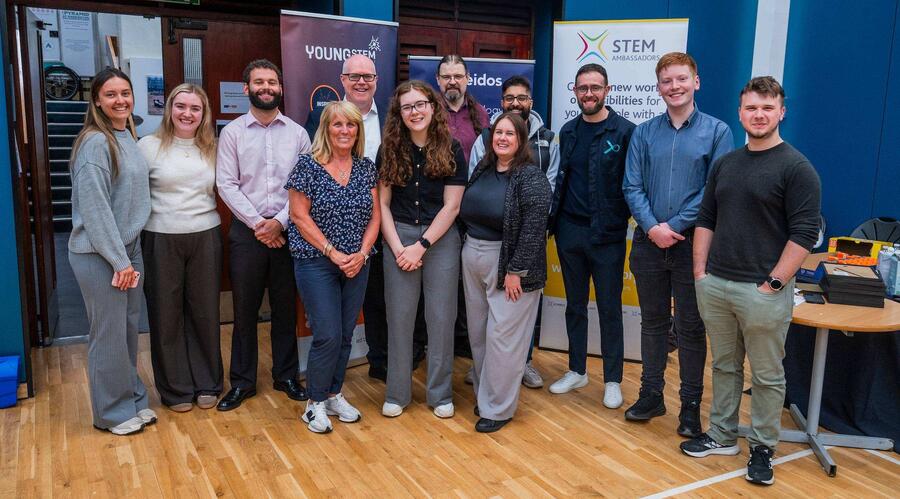
The Leidos UK and SSERC programme brings career exploration into a project pupils own. Mentors remain involved as ideas develop, workplace visits provide context, and the final showcase gives pupils an audience for their work.
For educators and employers developing similar programmes, that continuity offers a practical model to consider. It gives pupils repeated opportunities to ask questions, apply their learning and build confidence over an academic year.
Understanding how those experiences influence pupils’ choices after the challenge ends would add another measure of success. Following participants’ subject choices and subsequent education or career pathways could help establish the partnership’s longer-term contribution.
Key takeaways
- Sustained mentoring gives pupils time to explore STEM careers, develop practical skills and build confidence
- Leidos UK and SSERC have reached more than 250 pupils through five years of partnership
- Returning schools demonstrate continued interest in a programme that connects classroom learning with industry experience