Tracking military health through the Millennium Cohort Study

Why it matters
- Long-term evidence strengthens military health and readiness
- Research turns service members’ experiences into better care
- Findings have informed policy, prevention and screening
For more than three decades, Leidos has helped federal military leaders turn health questions into evidence that improves care and readiness. The Millennium Cohort Study shows that work in action, helping agencies better understand health challenges and strengthen programs as needs evolve.
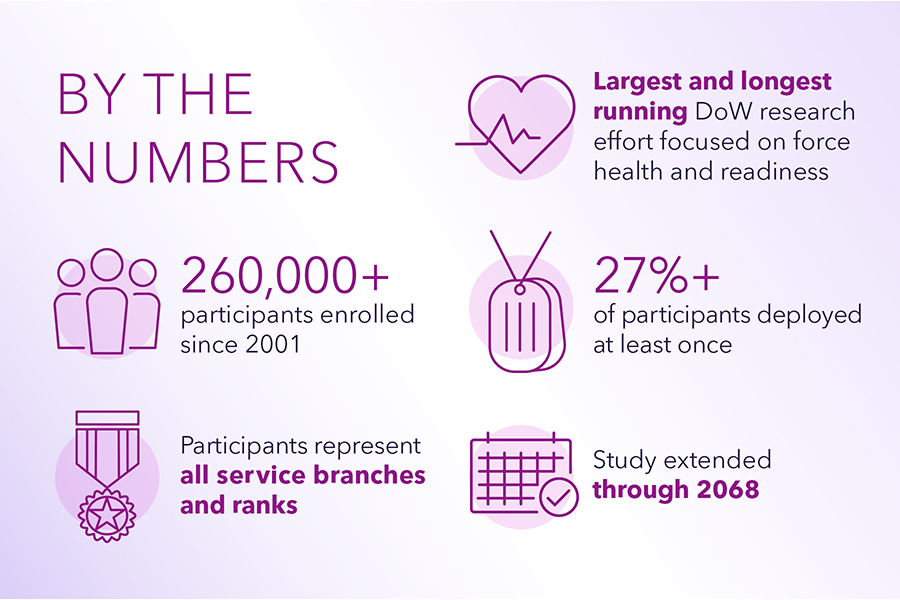
Launched in 2001, the Millennium Cohort Study is the largest prospective health study of U.S. service members and veterans. To date, more than 260,000 participants have contributed to a growing body of evidence on how military service affects health over time. The study surveys participants every three to five years and links survey data with administrative records. These data linkages create a longitudinal view of health, throughout military service, including deployment experiences, and through the transition into veteran life and beyond.
As the study marks its 25th anniversary, its findings continue to inform military health research, care and policy. For Leidos, the milestone also reflects a sustained partnership in research that helps federal agencies make decisions grounded in the lived experience of service members and their families.
Leidos' role in military deployment health research
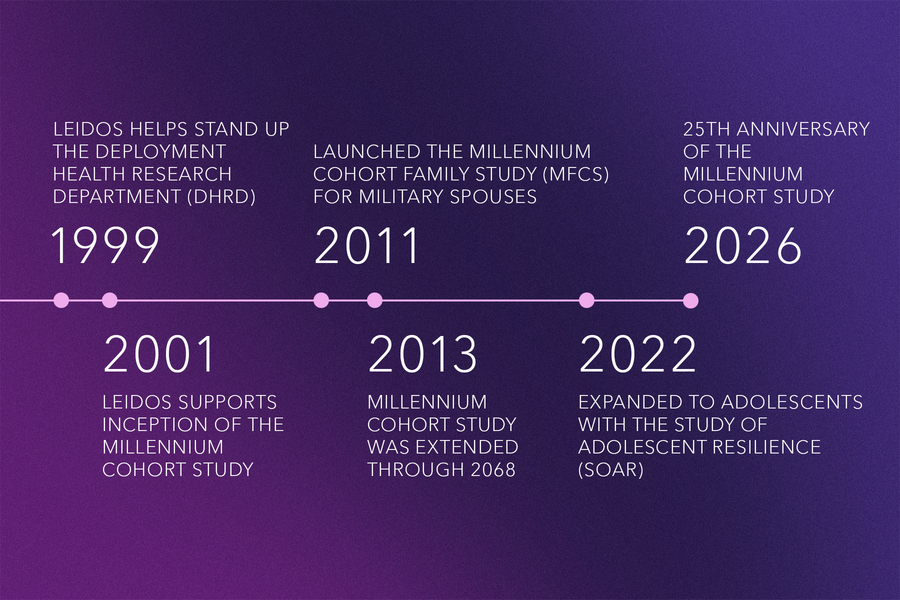
Leidos’ connection to this work began before the Millennium Cohort Study itself. In 1994, SAIC, now Leidos, was the original contractor supporting deployment health research at the Naval Health Research Center. That work helped establish a foundation for understanding the long-term health effects of service at a time when leaders needed better evidence to answer questions raised after the Gulf War.
In 1999, Leidos helped stand up the Deployment Health Research Department when it was designated as the Department of War’s premier Deployment Health Research Center. Two years later, Leidos supported the inception of the Millennium Cohort Study, helping launch a program designed to follow service members over time and separate assumption from evidence.
Today, Leidos supports the full lifecycle of the study in collaboration with the Naval Health Research Center, from participant recruitment and survey development to data analysis and publication.
How the Millennium Cohort Study tracks military health over time
The Millennium Cohort Study was built around a practical challenge: without long-term data, it is difficult to understand when health risks emerge and how they change over time. The study’s longitudinal design helps federal health leaders look across the full health journey of service members and veterans, rather than relying only on data collected after injuries or illnesses appear.
That approach has made the study an important resource for understanding the factors that shape military health, prevention and readiness. Related efforts, including the Millennium Cohort Family Study and the Study of Adolescent Resilience, or SOAR, extend the focus to military families.
From evidence to action: Millennium Cohort Study findings that changed policy and care
The value of a long-running study lies in the knowledge it generates and the difference it makes. By those measures, the Millennium Cohort Study has delivered, leading to more than 200 peer-reviewed publications across the broader program.
Some of its most important findings have focused on respiratory health. Research from the study helped show a link between combat deployment and new-onset asthma in previously healthy service members, deepening understanding of environmental and occupational exposures in deployment settings. Study findings also contributed to policy changes that added asthma, rhinitis and sinusitis to the Department of Veterans Affairs’ presumptive conditions for particulate matter exposure.
The study has also strengthened understanding of mental health over time. Its findings have advanced research on post-traumatic stress disorder, depression and anxiety, helping inform guidance and screening across the Department of War and the Department of Veterans Affairs. Researchers have also identified factors that can increase the risk of combat-related PTSD, including prior trauma and poorer predeployment health.
The study’s reach goes beyond deployment and health outcomes. By tracking smoking, alcohol use, fitness, obesity and sleep over time, it has helped military leaders better understand prevention and readiness across the force. Research has also examined a wide range of other issues affecting members of the military community, from injury and chronic disease to homelessness and family well-being.
Supporting military and veteran health through research
Federal health missions depend on more than technology delivery. They depend on the ability to ask the right questions, protect and manage complex data, analyze findings responsibly and translate evidence into insight that leaders can use. The Millennium Cohort Study brings those capabilities together.
Leidos’ support for the study reflects a broader commitment to helping agencies gain deeper insights into the communities they serve. Our work with the Naval Health Research Center applies mission understanding and multidisciplinary research expertise to help sustain a program with direct relevance to military readiness and veteran well-being.
The future of the Millennium Cohort Study
The Millennium Cohort Study is expected to continue enrolling and following participants through 2068. As the study enters its next quarter century, researchers are exploring additional health topics relevant to service members and veterans, including brain health and cognitive function, cancer, cardiovascular disease and environmental and occupational exposures.
At 25 years, the study stands as both a record of what long-term research can make possible and a reminder that the work is still underway. For Leidos, it is also a powerful example of how sustained federal health partnerships can improve readiness and deepen the nation’s understanding of those who serve.
Key takeaways
- The study has tracked more than 260,000 service members and veterans since 2001
- Its findings have advanced understanding of respiratory health, mental health, prevention and readiness
- Leidos supports the study’s full lifecycle, from participant recruitment through analysis and publication
LEARN MORE ABOUT LEIDOS SUPPORT FOR MILITARY AND VETERANS HEALTH