For more than 50 years, we have strengthened air traffic management with resilient technologies designed to keep skies safe and moving. Learn how we’re shaping the next era of air traffic control at home and abroad.
Mission Software
Software that turns mission need into operator advantage
We don’t just develop software. We deliver operator advantage.
Operator advantage isn't a one-time win. It's defined by how quickly organizations turn mission need into capability, how effectively operators turn that capability into action, and how well that edge holds up over time — not just at the moment of deployment.
We engineer enduring mission software that combines domain expertise, AI, data, secure software delivery, and digital engineering into one connected mission environment. Our software integrates legacy and emerging systems, fields capability at mission speed, and keeps improving long after deployment.

Secure-by-design
In classified and unclassified environments
~3x
Faster modernizations
Lifecycle tooling
For continuous improvement
How our software raises the standard
Fielding software across every domain
From information operations to air traffic, we build the software each mission actually runs on.
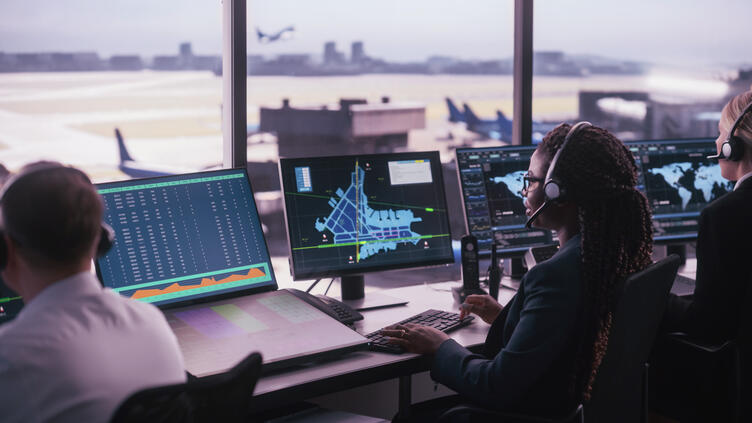
Imperium™
As information operations become more critical, Imperium—an AI-powered solution from Leidos and VML—helps teams understand, decide, and act faster. It brings clarity to complex, contested environments by generating deeper insights, anticipating trends, automating actions, measuring campaign effectiveness, identifying narratives, and accelerating responses to counter threats from strategic competitors.
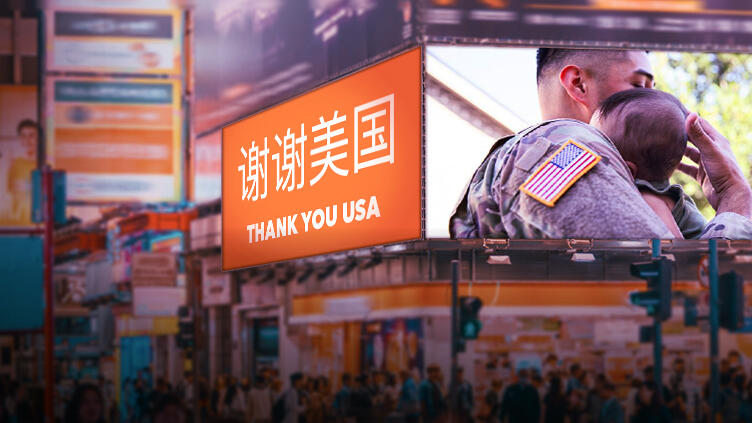
OC2ELOT
Our command and control software unifies distributed sensors, data streams and mission systems into a real-time operational picture, giving operators the decision advantage to act across land, sea, air and space. OC2ELOT demonstrates this capability through agentic AI and dynamic sensor tasking, integrating more than 20 third-party systems in space-domain testing and re-tasking sensors in under two seconds as mission conditions change.
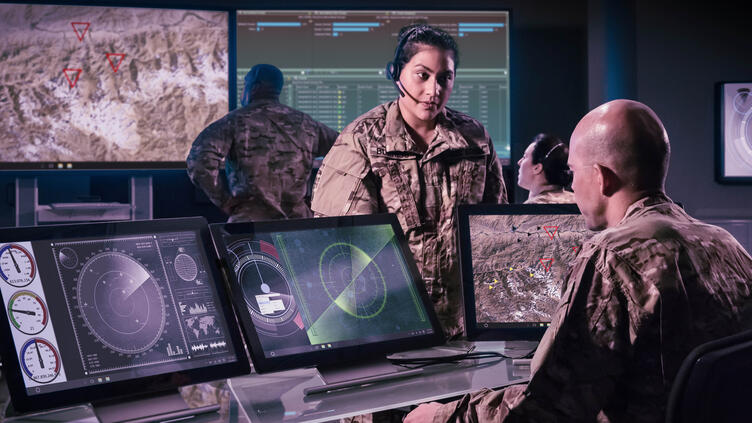
AlphaMosiac
Lightweight microservices trained on sophisticated survey arrays that help operators manage complexity in real time. By learning from live data and mission context, AlphaMosaic prioritizes actions, reduces cognitive load, and supports faster coordination—keeping pace with rapidly changing threats in dynamic operational environments.

Catena
We've developed Catena, a real-time supply chain management solution that underpins our work on CHS-6 and F-16 FMS PSI.

Digital Health
From electronic health records to grant management to public health surveillance, we've developed systems that streamline workflows, enhance collaboration, deliver actionable insights, and improve outcomes.


Our systems help guide more than
4M passengers
and 56k flights daily
Game changer
How the United States Can Become Faster and More Agile
On a recent podcast appearance, Leidos experts unpack how adversaries are using information operations to shape global perception and offset battlefield losses, and why the U.S. needs greater speed, reach, and scale to keep pace. They point to Imperium™ as the bridge between kinetic operations and modern IO — pairing AI with vetted data to compress planning and execution that once took practitioners days into a matter of minutes.
Read more
Related Insights

FAQs
-
Leidos builds software that connects sensing, data, and decision-making into a clear operational picture. This helps teams see what matters, decide faster, and act with confidence. We focus on outcomes—so software performance directly supports mission success, not just system compliance.
-
We apply AI where it improves decision speed, consistency, and accuracy in real operations. Our approach is secure by design and grounded in responsible use, so AI can be trusted in mission environments. We focus on making AI practical—integrated into the systems teams rely on every day.
-
We pair mission-speed delivery with software that's accredited, not aspirational: secure, compliant, and ready for operational environments from day one. Our open, modular architectures avoid vendor lock-in and adapt as mission needs evolve, while embedded AI and data expertise give operators a decision advantage — the insight to act with confidence, faster. We manage the full lifecycle, from design through deployment and continuous improvement, so capability keeps getting better long after it's fielded.
-
Our software is built to operate across cloud, hybrid, and air-gapped environments. Systems continue to function even when networks are limited, degraded, or under attack. This ensures mission continuity and decision support in the conditions where it matters most.
-
We use shared platforms and reusable components to scale delivery across programs. This improves consistency, reduces duplication, and speeds development. By simplifying how teams build and share software, we remove friction and keep missions moving forward.